
By Dr. Anthony Cutting, DC
Why Does It Settle Down, Then Hurt Again?
You take a break from running, and the back of your ankle feels better. You start again, and the same pain returns. Maybe you’ve already stretched, done exercises, or completed physical therapy. It is frustrating to put in that effort and still feel stuck.
There isn’t one explanation that fits everyone. We need to look at what is causing the pain, what your previous treatment involved, and what happens when you return to the activities that bother it.
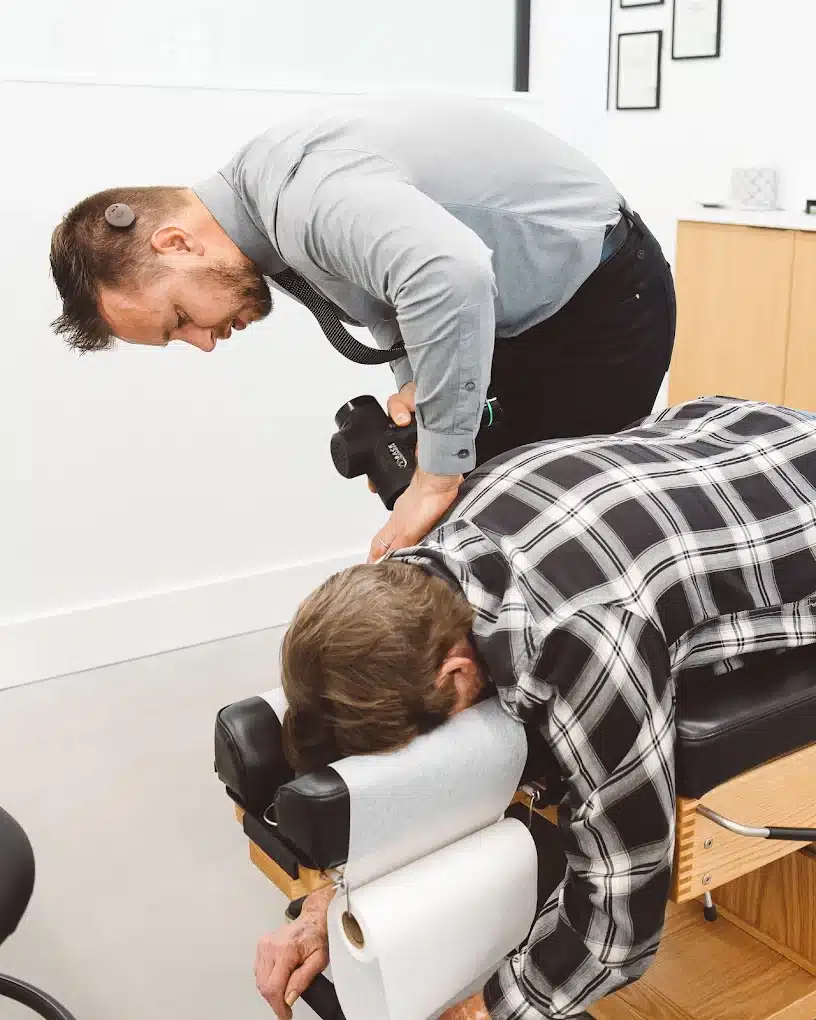
At Active Chiropractic Meridian, I start by listening to that history. You don’t need another promise that the next treatment will fix everything. You need a clearer understanding of what to try next and why.
Is The Tendon Actually Causing The Pain?
A tendon connects muscle to bone. Tendinopathy is a term used for tendon pain and difficulty with activities that put the tendon to work. It isn’t a diagnosis we can confirm from the location of pain alone.
This article mainly uses the Achilles tendon, at the back of the ankle, as an example. Pain close to its attachment at the heel can need a different approach from pain farther up the tendon. The Dutch Achilles guideline explains that distinction and the need to consider other possible causes.
That is one reason an examination matters, especially if symptoms have changed since you were first seen. The treatment you need now may depend on more than the name you were given months ago.
Shoulder symptoms need their own assessment. Our shoulder pain page covers some of the differences between tendon problems, stiffness, arthritis, and pain coming from the neck.
Why Rest Alone May Not Be Enough
Rest can remove the activity that keeps irritating an area. Feeling better during that break doesn’t necessarily mean the tendon is ready for the same run, long walk, or workday that bothered it before.
For adults with confirmed midportion Achilles tendinopathy, the 2024 clinical practice guideline recommends tendon-loading exercise as a first-line treatment and advises against complete rest. Loading simply means asking the muscle and tendon to work.
The useful question is how much work is appropriate for you and how to build from there. That needs to account for your examination and your response, rather than a routine borrowed from someone online.
If you’ve been alternating between doing nothing and going straight back to your old routine, tell your clinician. That pattern is worth discussing before you assume another period of rest will produce a different result.
Stretching And Strengthening Are Different
It is easy to describe both as doing your exercises, but they aren’t the same thing.
Stretching may address flexibility. Strengthening asks the muscle and tendon to work against resistance. The Dutch guideline includes education, changes to activities that provoke symptoms, and calf exercises in its recommendations for Achilles tendinopathy.
When I ask what you tried, the details help. Were you mainly stretching? Did the exercises change as you got stronger? Did anything feel better, or did one exercise consistently make things worse?
Bring the exercise sheet if you have it. We can review what you were asked to do and how it went. More stretching or a harder exercise isn’t automatically the right next step.
Look At The Whole Week, Not Just The Workout
Your tendon doesn’t only work during the twenty minutes set aside for exercise. A long shift on your feet, stairs at home, a walk with the dog, and a weekend run may all be relevant.
Tell us what an ordinary week looks like. You don’t need a detailed diary. A few examples can help:
- When does the pain start during a walk or run?
- Does it feel different after a long workday?
- What happens later that day or the next morning?
- What changed before the symptoms became more difficult?
Those details help us understand where the problems arise. The Dutch guideline’s advice on managing load includes reviewing activities that bring on symptoms. Your clinician can help you work out what to change without leaving you to guess.
What Happened During Physical Therapy?
If you’ve already had physical therapy, I want to understand what happened during it.
What was the original diagnosis? Which treatments or exercises were used? What improved? What was still difficult when you finished?
Perhaps you could walk around the house comfortably but still couldn’t manage the longer route you enjoy. Perhaps an exercise was difficult to tolerate, or appointments ended before you felt ready to continue on your own. The details help us see what still needs attention.
Bring a discharge summary or exercise plan if you have one. We can use that information when considering the next step. Continued pain doesn’t mean your previous provider did something wrong or that all of that work was wasted.
What We Review When Progress Has Stalled
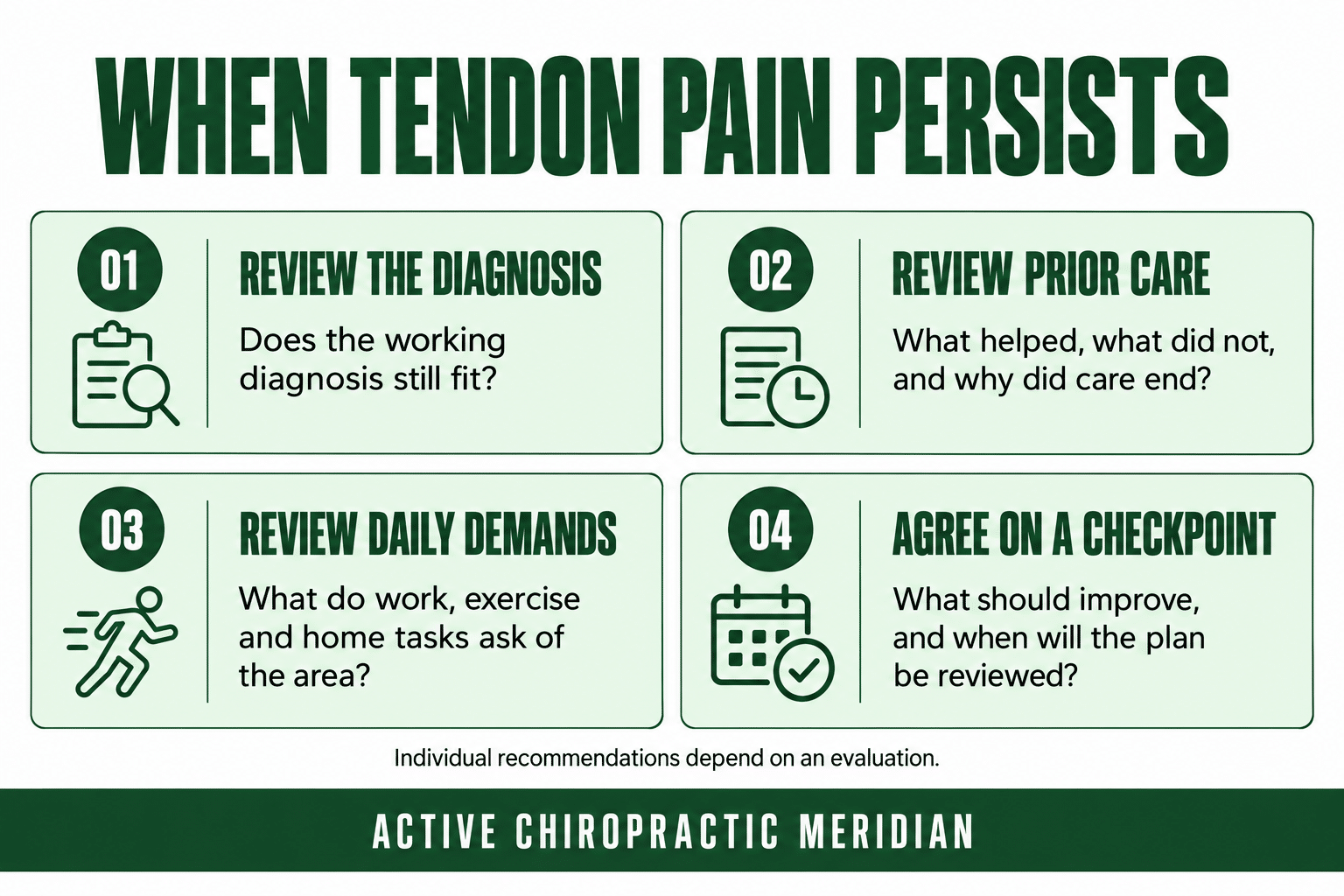
If you’re putting in the work and nothing seems to be changing, it is reasonable to ask for a review.
I want to know whether the original diagnosis still fits, whether the exercises are appropriate, and whether something in your daily routine is making it difficult to progress. Your health history and any new symptoms also belong in that discussion.
Sometimes another examination, imaging, or a different medical opinion is needed. The Dutch guideline discusses additional assessment when symptoms don’t follow the expected pattern.
An MRI isn’t automatically the answer to persistent pain. If imaging is recommended, ask what we are trying to find out and how the result would change what happens next. You should understand why it is being suggested.
When Shockwave Or Laser May Be Considered
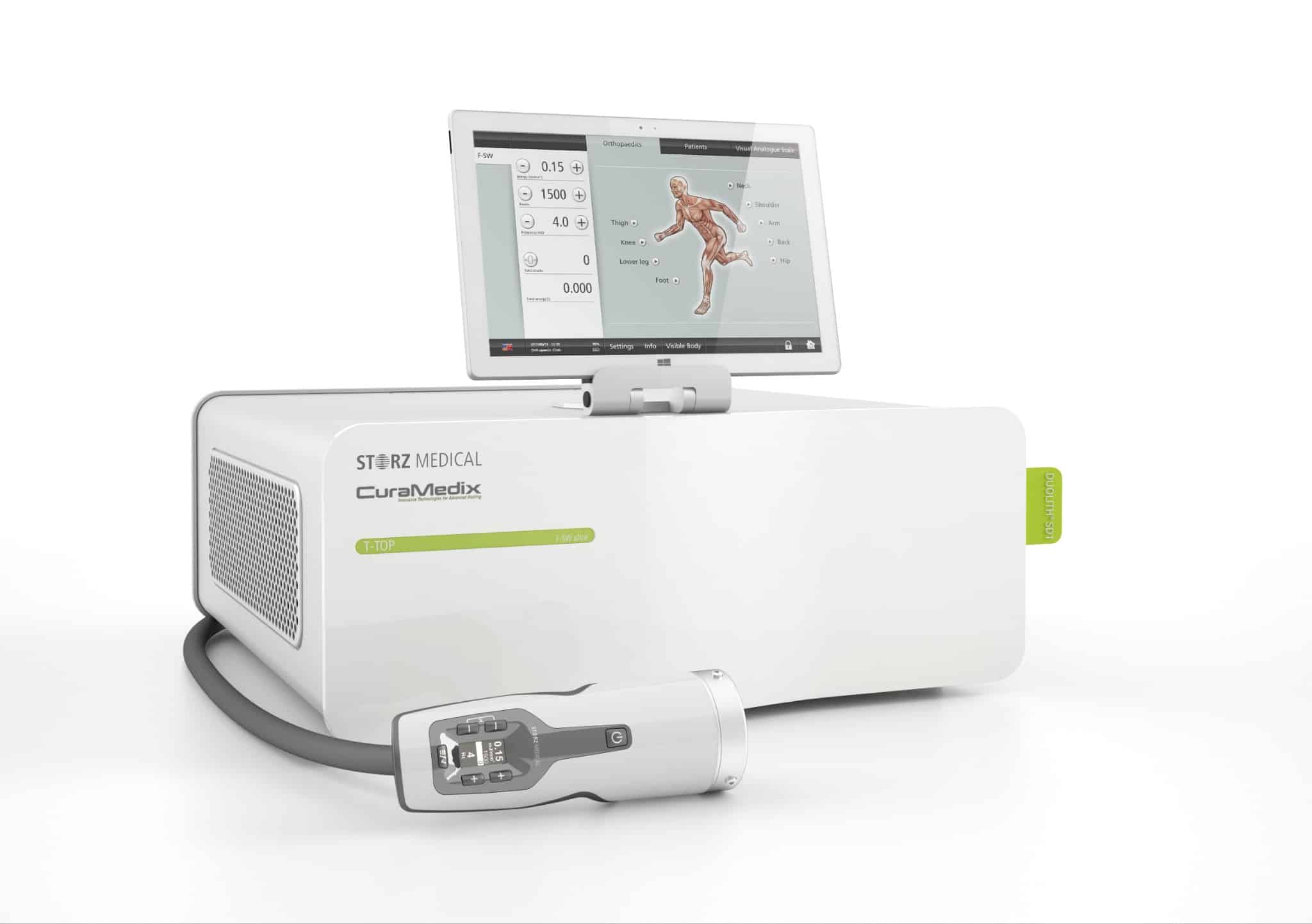
Shockwave therapy and Class IV laser are among the services offered at Active Chiropractic Meridian. They may be discussed for some conditions, but continued pain after physical therapy doesn’t automatically mean you need either one.
The research needs to fit the problem being treated. For Achilles tendinopathy, NICE describes the evidence for shockwave as limited and inconsistent. That UK guidance emphasizes explaining the uncertainty to patients.
Laser treatment also varies. The 2024 Achilles guideline recommends against low-level laser for midportion Achilles tendinopathy. That is a specific recommendation about low-level laser; it doesn’t answer every question about Class IV treatment.
If another treatment is recommended, ask why it is being added, what benefit is reasonably expected, and how it fits with your exercise or rehabilitation. You should get more of an explanation than simply being told to try something different.
Choose A Useful Way To Track Progress
A pain score can help, but I also want to know what you can do.
Can you walk farther before the ankle starts bothering you? Are stairs easier? Can you finish a workday with fewer limitations? The right questions depend on what matters in your life.
Before starting or changing care, agree on what you will watch for and when you will review it. Ask what would lead to a different recommendation if things aren’t improving.
You don’t need to compare your progress with someone else’s recovery. You do need a clear explanation of what your clinician is looking for and what the next step will be.
When To Seek Prompt Medical Care
A sudden injury needs a different response from a familiar ache after activity.
The American Academy of Orthopaedic Surgeons describes a pop, sudden pain, and trouble pushing off or rising onto your toes as possible signs of an Achilles tear. Seek prompt medical assessment for a sudden pop with new weakness or loss of function. Don’t stretch or train through it while waiting for a routine appointment.
An inability to bear weight after an injury or a significant change in your symptoms also deserves medical attention. An old tendon diagnosis shouldn’t be used to explain away a new injury.
Bring What You’ve Already Tried
You can ask for another evaluation without deciding on another treatment first.
Bring any relevant reports, your previous exercise information, and a few examples of what is still difficult. Tell me what you want to get back to, whether that is running, a longer walk, or getting through work more comfortably.
I will explain what I find and whether our services seem appropriate. If you would be better served by another provider, I will say so.
Contact Active Chiropractic Meridian or call 208-593-2001. Our office is at 2145 E. Fairview Ave, Suite 140, Meridian, ID 83642.
FAQs
Does pain after physical therapy mean the tendon cannot improve?
No. Continued pain is a reason to review the diagnosis and what happened during treatment. Tell your clinician what improved, what didn’t, and what remains difficult. Those details can help determine whether to change the approach or seek another opinion.
Should I stop all activity until Achilles pain disappears?
For confirmed midportion Achilles tendinopathy, current guidance supports appropriate exercise rather than complete rest. Ask your clinician what is suitable for you. A new injury or suspected tear needs a different assessment, so don’t use general exercise advice to decide how to handle it.
Do I automatically need shockwave if exercises have not helped?
No. First, review the diagnosis and the exercises you were given. If shockwave is suggested, ask why it may help your particular condition, what the research shows, and how you will review the results.
What information makes a second evaluation more useful?
Bring relevant reports, your previous treatment or exercise plan, and examples of the activities that still cause trouble. It also helps to explain why previous care ended and whether your symptoms have changed since then.
Sources
- Academy of Orthopaedic Physical Therapy: Midportion Achilles Tendinopathy Clinical Practice Guideline, 2024
- Dutch multidisciplinary guideline on Achilles tendinopathy, British Journal of Sports Medicine, 2021
- NICE HTG426: Shockwave therapy for Achilles tendinopathy
- AAOS OrthoInfo: Achilles Tendon Rupture