
Shoulder Pain, Frozen Shoulder & Rotator Cuff Care in Meridian, ID
Shoulder Pain, Frozen Shoulder & Rotator Cuff Care in Meridian, Idaho
When your shoulder starts changing what you can do, the question usually becomes bigger than, “How do I make it hurt less?”
You may be wondering whether you can sleep on that side again, reach into a cupboard without thinking about it, lift weights, work overhead, play pickleball, finish 18 holes, or throw a football with your child.
At Active Chiropractic Meridian, Dr. Anthony Cutting evaluates shoulder problems with those goals in mind. The purpose of the evaluation is to develop a reasonable working diagnosis, identify contributing factors, explain what the shoulder is and is not doing well, and decide whether conservative care may be appropriate.

Short Answer
Shoulder pain is not one diagnosis. Frozen shoulder, rotator cuff problems, arthritis, other shoulder structures and pain referred from the neck can overlap in how they feel. A useful plan starts by determining which pattern best fits the history and examination rather than treating every painful shoulder the same way.
Why the right shoulder diagnosis matters
Two people can point to the same part of the shoulder and have different problems. Dr. Cutting describes shoulder pain as surprisingly deceptive for exactly that reason.
A painful shoulder may involve the rotator cuff, the shoulder joint, arthritis, substantial joint stiffness, surrounding soft tissues, or symptoms referred from the neck. The treatment decision can change depending on which problem is most likely, how much motion or strength has been lost, what happened before symptoms started, and what the patient needs the shoulder to do.
That is why Active Chiropractic Meridian does not use one shoulder protocol for everyone.
What Dr. Cutting looks at during a shoulder evaluation
A shoulder evaluation may include:
- How and when the symptoms began
- Whether there was an injury, fall, collision or gradual onset
- Which movements or activities reproduce the symptoms
- Active range of motion, meaning how far you can move the shoulder yourself
- Passive range of motion, meaning how the shoulder moves when the examiner moves it
- Strength and control during relevant shoulder movements
- Whether numbness, tingling or weakness suggests the neck may be contributing
- Previous treatment, imaging and what changed or did not change
- The activity or function you want to return to
The goal is not to claim that every shoulder problem has one hidden cause. The goal is to arrive at a useful working diagnosis and decide what the next step should be.
Frozen shoulder in Meridian: when stiffness is the dominant problem

Frozen shoulder, also called adhesive capsulitis, typically develops with pain and substantial stiffness. One of the key examination findings is that both active and passive motion are limited.
People often describe difficulty reaching behind the back, reaching overhead, putting on a coat, fastening clothing, or finding a comfortable sleeping position.
The American Academy of Orthopaedic Surgeons notes that frozen shoulder commonly improves over time, but recovery can be slow. Physical therapy focused on restoring shoulder flexibility is a primary treatment recommendation, and some patients may also need medical management such as injections or, less commonly, surgical treatment depending on the case.
At Active Chiropractic Meridian, a patient with suspected frozen shoulder is evaluated to determine whether the presentation fits that pattern and whether the services available in the office are appropriate as part of the conservative plan. The practice does not claim to cure frozen shoulder or guarantee a faster recovery.
Rotator cuff pain and tears: the MRI is only part of the decision
The rotator cuff is a group of muscles and tendons that helps stabilize the shoulder and assists with lifting and rotating the arm.
Rotator cuff problems can present with pain, weakness, night symptoms or difficulty with overhead activity, but those symptoms are not specific enough to diagnose a tear on their own. Strength testing, movement testing and the history help guide the working diagnosis.
If an MRI already shows a rotator cuff tear, the image matters, but it does not answer every treatment question by itself. Current AAOS guidance shows that both physical therapy and operative treatment can improve outcomes for some symptomatic small to medium full-thickness tears. The decision between conservative management and surgical evaluation depends on the individual tear, weakness, function, activity demands, age, health history and response to appropriate care.
Dr. Cutting’s approach is not to promise that every rotator cuff problem can avoid surgery. If the findings suggest another provider or an orthopedic evaluation is the better next step, he will say so.
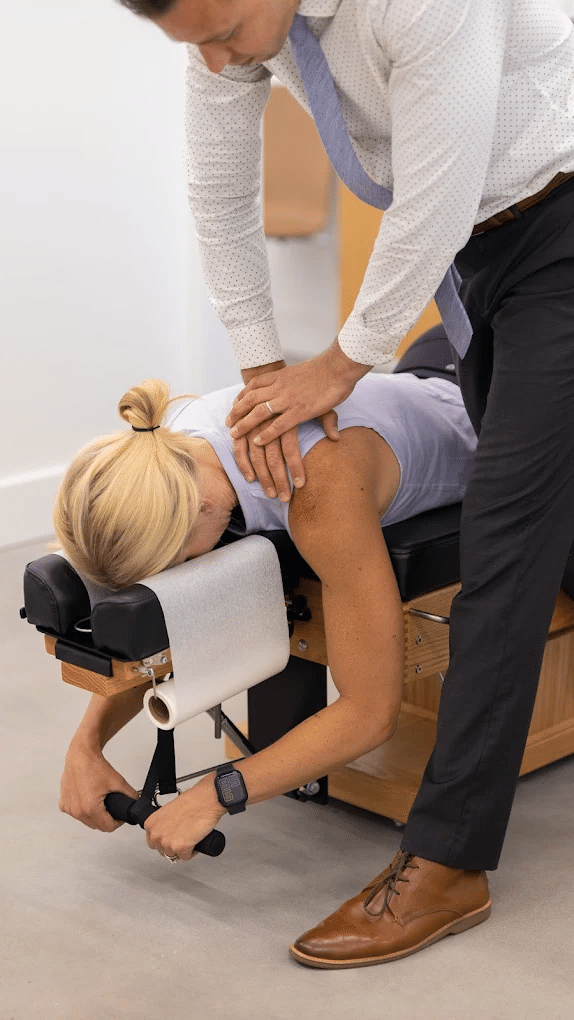
Could the pain actually be coming from your neck?
Sometimes the shoulder is not the primary source of the symptoms.
Dr. Cutting’s clinical evaluation also considers whether irritation involving the neck may be contributing, especially when pain is accompanied by numbness, tingling or weakness that travels into the shoulder, arm or hand.
This is one reason treating only the spot that hurts can miss important information. The examination should match the treatment plan to the most likely source or sources of the symptoms.
What about shoulder arthritis?
Shoulder arthritis can cause aching, stiffness and progressively limited movement. Imaging may show structural changes, but the treatment decision should still consider how the shoulder is functioning and how much the symptoms affect daily life.
Active Chiropractic Meridian does not claim to reverse arthritis. The question is whether there are modifiable factors, such as movement, strength or surrounding tissue function, that may be addressed conservatively and whether that approach is reasonable for the individual patient.
If arthritis is advanced, symptoms are severe or function is significantly limited, medical or orthopedic consultation may be appropriate.
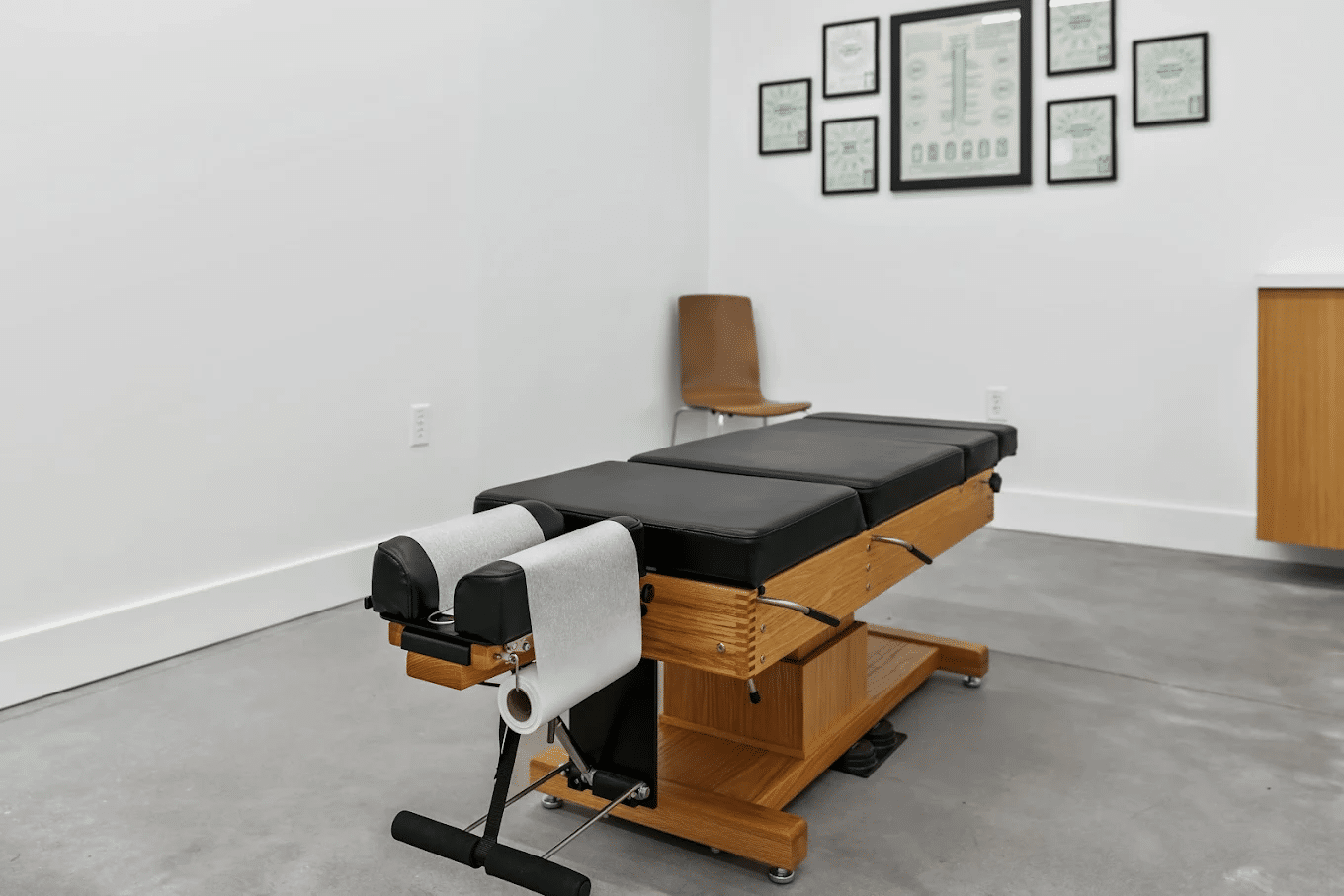
What if physical therapy, injections or other treatment did not solve the problem?
Many patients arrive after already trying something else.
Previous treatment is useful information, even when the result was incomplete. Dr. Cutting looks at what improved, what did not change, what activities still trigger the shoulder, whether the original working diagnosis still fits, and whether the shoulder has changed since the last evaluation.
A different conservative plan is not automatically the answer. Sometimes the useful next step is a different approach. Sometimes it is imaging. Sometimes it is referral.
The point is to avoid repeating care without first asking what the previous response tells us.
Do you always need an MRI for persistent shoulder pain?
No.
For chronic shoulder pain, the American College of Radiology lists shoulder radiographs as the usual initial imaging study. When a rotator cuff disorder is suspected and initial radiographs are normal or inconclusive, ultrasound or MRI without contrast may be appropriate next studies.
For frozen shoulder, AAOS notes that MRI and ultrasound are not required to make the diagnosis, although they may help identify another soft-tissue problem such as a rotator cuff tear.
Imaging is most useful when it answers a specific clinical question or changes what happens next.
What conservative shoulder care may include at Active Chiropractic Meridian
Recommendations depend on the working diagnosis and individual evaluation.
A shoulder plan may include one or more of the following when appropriate:
- Rehabilitation and movement-based care
- Soft-tissue treatment
- Chiropractic care
- Shockwave Therapy for selected diagnoses and presentations
- Class IV Laser for selected diagnoses and presentations
Not every shoulder condition should receive every service. A treatment should be included because the individual evaluation supports it, not simply because the shoulder hurts.
Progress is about more than a pain number
Pain matters, but function often tells a clearer story about whether care is moving in the right direction.
Depending on the patient, progress may mean:
- Reaching higher or behind the back more comfortably
- Sleeping with fewer shoulder-related limitations
- Lifting with better control
- Tolerating more work or exercise
- Returning to golf, pickleball, strength training or another sport
- Picking up a child or grandchild with more confidence
Dr. Cutting builds recommendations around the activity a patient wants to regain rather than promising one standard result for everyone.
When shoulder symptoms need more urgent medical attention
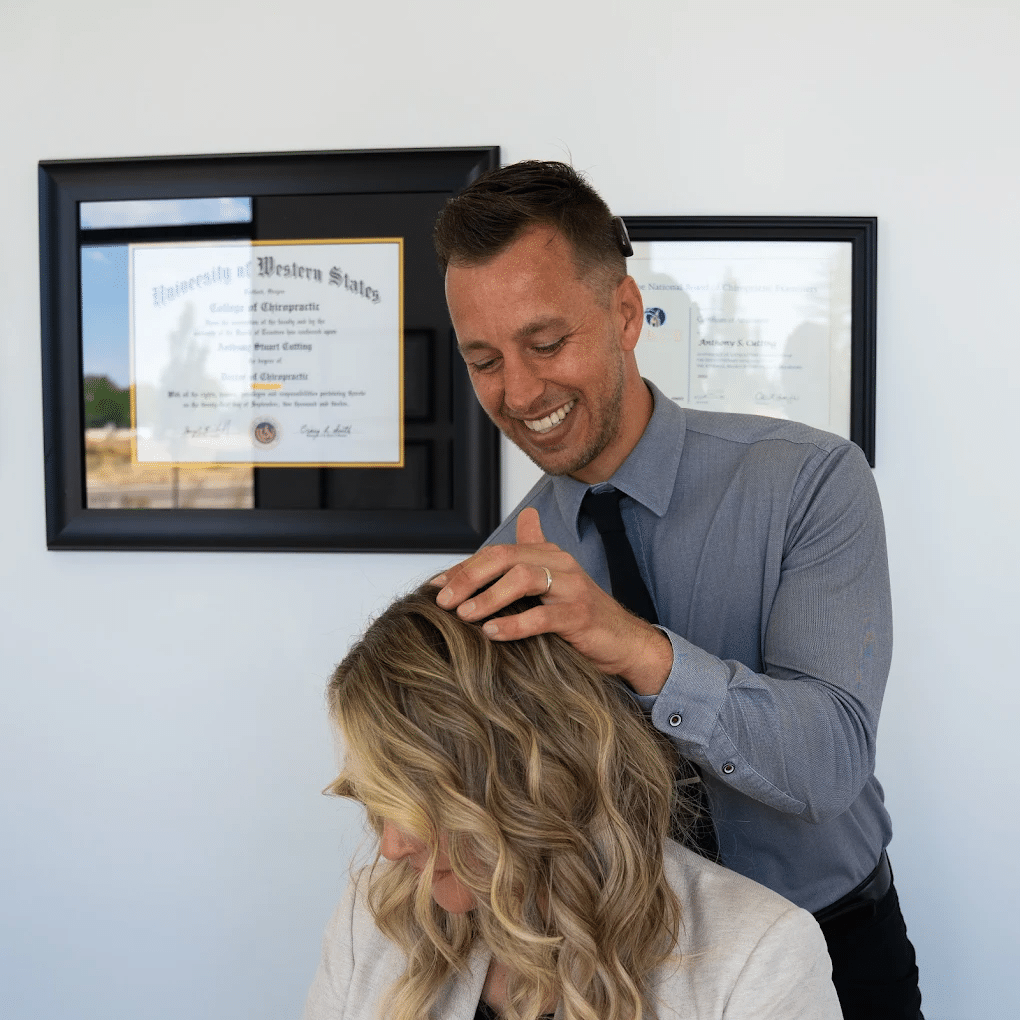
A routine musculoskeletal evaluation is not appropriate for every shoulder complaint.
Seek prompt medical attention after significant trauma if the shoulder appears deformed, you cannot use the arm normally, there is sudden major weakness or swelling, or a fracture or dislocation is possible. New neurologic or vascular symptoms also warrant timely medical evaluation.
Shoulder discomfort associated with chest pressure, difficulty breathing, sweating or other possible cardiac symptoms requires emergency medical evaluation.
Why patients choose Active Chiropractic Meridian for shoulder evaluation
Dr. Cutting’s approach is built around a question many patients are really asking before they choose a provider: Can I trust you to tell me what makes sense?
He listens first, explains the findings in plain language, gives realistic expectations and recommends care based on the patient’s goals and the working diagnosis. If the situation calls for another provider or surgical evaluation, the practice’s stated approach is to say so.
Active Chiropractic Meridian evaluates more than spinal complaints and may address shoulders, knees, hips, feet, muscles, movement patterns and nervous-system function when appropriate.
Shoulder pain care in Meridian, Idaho

Active Chiropractic Meridian is located at 2145 E. Fairview Ave, Suite 140, Meridian, ID 83642, on Fairview between Eagle and Locust Grove.
If shoulder pain, stiffness or weakness is interfering with sleep, work, exercise, sports or everyday reaching, call 208-593-2001 to schedule an evaluation with Dr. Anthony Cutting. Bring any relevant imaging or previous treatment information and be ready to discuss the activity you most want to return to.
FAQs
Can a chiropractor evaluate shoulder pain in Meridian, Idaho?
Yes. Dr. Anthony Cutting evaluates shoulder complaints at Active Chiropractic Meridian, including movement, strength, function, relevant neck findings, previous treatment and the patient’s goals. Whether chiropractic care or another conservative service is appropriate depends on the working diagnosis and individual evaluation.
How can you tell frozen shoulder from a rotator cuff problem?
Frozen shoulder typically limits both active and passive range of motion. Rotator cuff problems may be more associated with pain or weakness during specific active movements while passive motion is less restricted, although the patterns can overlap. A history and examination are more useful than relying on one symptom.
Can conservative care help if an MRI shows a rotator cuff tear?
Sometimes. The appropriate plan depends on the type and size of the tear, how it happened, weakness, function, activity demands, health history and other factors. Some tears are managed conservatively while others warrant orthopedic or surgical evaluation.
Can Active Chiropractic Meridian reverse shoulder arthritis?
No. Arthritis cannot be reversed by chiropractic care, Shockwave Therapy, Class IV Laser or rehabilitation. Conservative care may still be considered for some patients when the goal is to improve movement, strength, function or activity tolerance, depending on the individual evaluation.
What if I have already tried physical therapy or injections?
Previous treatment does not automatically rule in or rule out another conservative approach. Dr. Cutting reviews what changed, what did not, whether the working diagnosis still fits and whether imaging or referral should be considered before recommending the next step.
Does shoulder pain always need an MRI?
No. Imaging decisions depend on the history, examination and clinical question. For chronic shoulder pain, radiographs are commonly the initial imaging study. MRI or ultrasound may be appropriate when a soft-tissue problem such as a rotator cuff disorder is suspected and the result would help guide management.